

2025 was a heavy year. Globally, personally, professionally, it felt like things were happening nonstop, with barely any space to process. As my christmas break approached, I had another post planned, but I decided to change course and use this last newsletter of the year in a different way.
This will be personal, but the goal is not to rant or list achievements. I want to share three learnings from this year, around workload, creativity, and the current state of the gaming industry, and talk about what I want to do differently in 2026. If nothing else, think of this as a small pause before we all move on to the next level.
Creativity needs maintenance 🧠
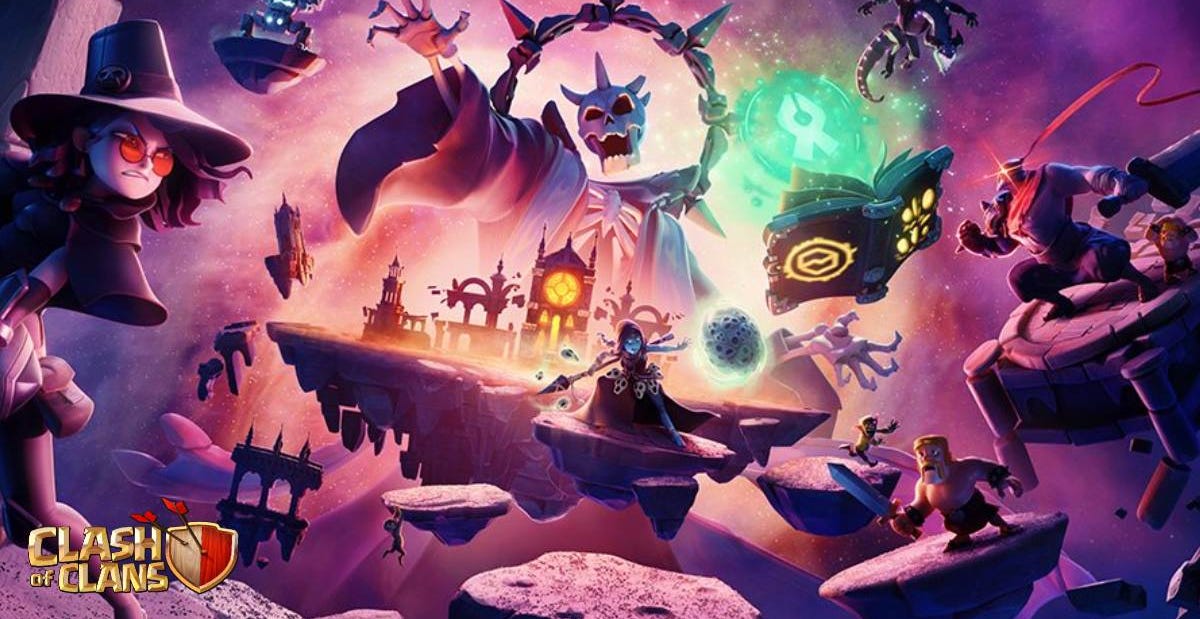
For some quick context, I have been working in the gaming industry for over a decade as a UX designer, mostly in mobile games. I currently work on Clash of Clans, a game I genuinely care about, both as a developer and as a player.
That mix is powerful, but it can also be dangerous.
When you deeply care about a project, it becomes easy to push yourself further than necessary. Not because anyone is asking for it, but because you want to do right by the players, the team, and the game. This year, that dynamic was very present for me.
I was involved in several features, but two stood out as the most demanding challenges of my career so far. They were big swings that changed core parts of the game, required constant tradeoffs, and brought a lot of interesting design challenges. I even had the chance to explain one of these features directly to players in a video.
Ok, this looks like a positives-only story.
But toward the very end of the year, something felt off.
I was not burned out in the classic sense. I was still delivering and engaged, but creatively, I felt drained. I struggled to generate new ideas, could not reconnect with my hobbies, and even writing here did not flow as naturally as before. I picked up the guitar and nothing came out. Gaming felt boring. Everything felt flat.
After pausing with that feeling for a few days, something clicked 💡
Without fully realizing it, I had spent the year consuming creative energy without replenishing it. I’m always telling myself and others that creativity needs to be nurtured, yet I had accidentally put myself on a kind of creative fast.
I was productive, but I was not feeding the part of me that makes that productivity sustainable. I was solving problems at work, while neglecting playing music, reading comics, and other creative outlets that usually keep my passion alive.
What really hit me was realizing there was no crunch culture to blame this time, no external pressure to point at. This was a trap I set for myself, and I had to own it.
Here is learning number one: balance matters, especially when your work depends on creativity and passion. We live in a world that rewards constant output, and it is easy to forget that creativity is not infinite. If it is not nurtured, it dries up.
Give yourself permission to pause. Not to optimize rest, but to actually chill. Play a game just to play it. Spend time on your hobbies without turning them into side projects. Go for a walk, spend time with people you care about, do things that exist outside productivity loops. I am taking the time to do all that, and I am confident things will be fine in the next cycle 😉
Your work is only one part of who you are, and its quality depends far more on your well being than we usually like to admit.
A tale of two industries 🎭
The broader entertainment industry feels shaky right now. Big corporations are trying to squeeze every possible drop out of proven formulas, quality swings wildly, and short term thinking often wins over long term care. I will stick to the gaming industry here, since it is my favorite form of entertainment, and chances are, if you are reading this, it is yours too.
The amount of layoffs over the past two years has been brutal. The job market feels tense, with multiple senior professionals competing for every open role, studios shutting down, and projects being greenlit or cancelled based on abstract forecasts rather than a real understanding of their consumers. Add gambling mechanics creeping further into games plus questionable acquisitions, and it becomes harder to stay optimistic when looking at the headlines.
But there is another side to this story.
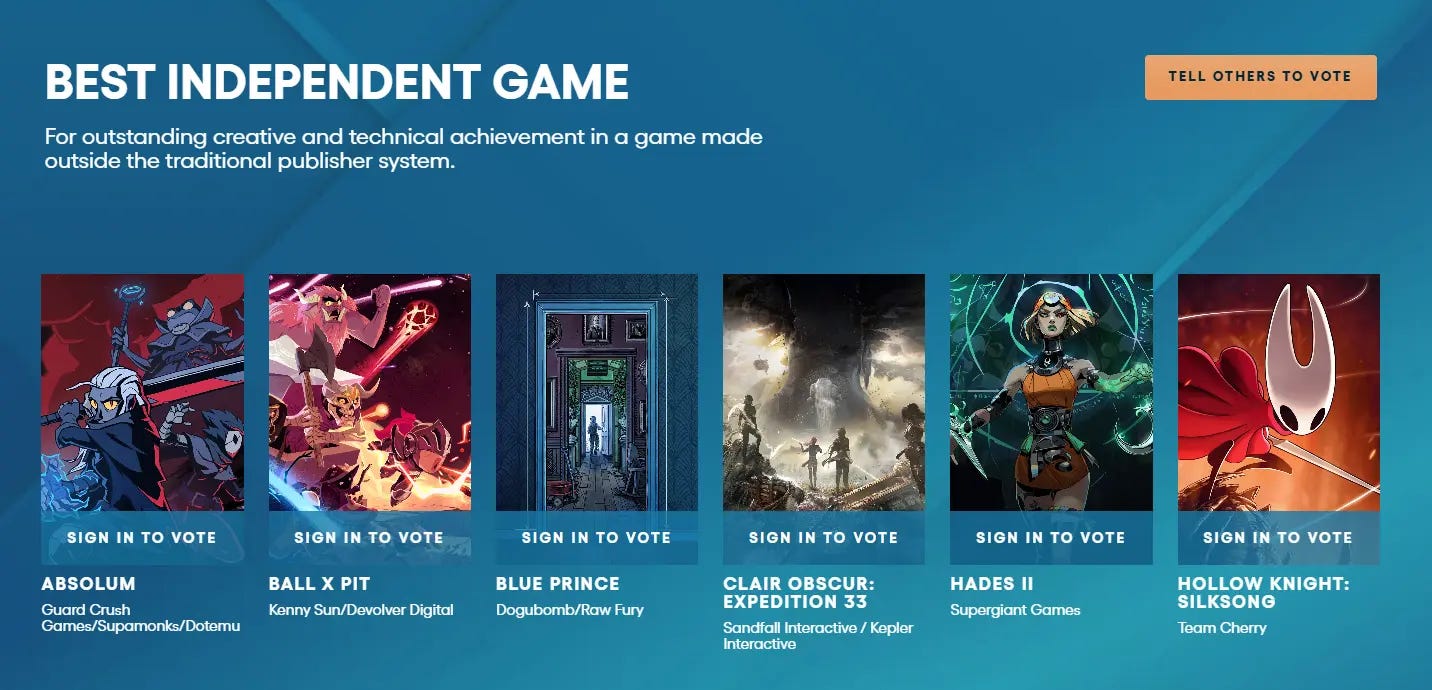
At the same time, we are seeing incredible games succeed by taking a very different approach. Smaller teams are shipping focused experiences, studios are proving you can do more with less, and titles are climbing the charts by listening to their players and building genuine connections with their communities. Indie games have been leading this charge, with examples like Expedition 33 and Silksong reinforcing the importance of fair pricing, meaningful updates, and long term trust. I am sure larger studios are paying attention, and slowly things tend to course correct.
What fascinates me is that both sides of this industry are often looking at similar data, yet arriving at completely different conclusions. While some companies read the numbers as a signal to play it safe on innovation or double down on aggressive monetization, others interpret the same signals as a reason to stay bold creatively, practice restraint, and invest in long term trust. Many of these teams avoid massive marketing budgets that inflate costs and push return expectations to unrealistic levels. The recent debate around 80 dollar price tags is a good example of how business decisions can drift away from what consumer behavior actually tells us.
Living inside this tension brings me to learning number two.
Understanding business and being able to interpret data is more important than ever for creative minds. It directly strengthens your ability to promote your vision and advocate for players.
In corporate environments, which describes most game companies today, speaking the language of business helps your ideas survive prioritization meetings, budget reviews, and roadmap discussions. It allows you to frame player first decisions in ways that resonate with leadership, defend the right tradeoffs with clearer arguments, and influence outcomes where they matter most.
This is something I want to explore more deeply in a future newsletter, but I strongly believe the discomfort many UX designers feel around business topics is holding us back. Avoiding these conversations limits our influence and makes it harder to establish the right mindset where the most impactful decisions are actually made.
As a result, evolving my understanding of business and data is firmly on my radar for the next year, and I would encourage anyone working in the industry to do the same.
The elephant in the room 🐘
It would be hard to do a 2025 recap without touching on AI. This is a complicated topic for me, and one I want to explore more deeply in a future post, once I find the right words to do it justice. For now, here is the short version: I am deeply uncomfortable with how things are going, but I also know this is not going away.
Earlier in my career, around the early 2010s, I worked on projects involving machine learning, big data, and IoT at a Samsung R&D facility. The technical foundations behind those efforts are not radically different from what powers many of today’s AI tools. What feels different now is the framing. A lot of what surrounds generative AI today feels rushed, overhyped, and careless.
What frustrates me most is not the technology itself, but how aggressively it is being pushed into creative spaces. Generative AI often presents an ultra simplified, highly processed shortcut to complex thinking. My real concern is the long-term effect this has on our perception of quality. If enough low effort content is normalized, the bar shifts. Maybe people around our age will push back, but I worry about what becomes “normal” for the next generation.
At the same time, I have to be honest with myself.
I have worked in tech long enough to know there is no rollback here. These tools will continue to evolve, adoption will increase, and eventually things will stabilize. Ignoring them does not stop that process. It only removes our ability to influence how they are used.
So here comes my last learning.
If I want to have a meaningful voice in future conversations about AI, I need to understand it better. That does not mean abandoning ethical concerns or blindly adopting every new tool. It means learning enough to separate useful applications from harmful ones, and to argue for responsible use from a position of knowledge rather than rejection. Just like with business literacy, understanding does not mean agreement. It means agency.
I fully respect anyone who disagrees with this stance. And no, I am not ok with AI systems trained on stolen work or used to replace creative professionals under the guise of efficiency. But if we want to push back on those practices, or help shape better alternatives, we cannot do that from the outside.
In the tech industry, knowledge is leverage.
Even when the topic makes us uncomfortable.
📝 Final Notes
This ended up being longer and more personal than usual, but that felt right. If even one of these reflections helped you pause or see these topics a bit differently, then this piece did its job.
We are closing one year and stepping into another that will bring its own mix of surprises and challenges. So take a break, recharge, and step away from the noise when you can.
Thank you for reading and for helping me build this space during its first year. I am looking forward to continuing the conversation in 2026.
Take care, and see you in January.