



Welcome to Gamers Book Club, where I share a book recommendation each month as a substack note. Every few months, I collect those suggestions into a single post like this one, so you can check all in one go.
This edition brings together the books from September to December 2025. They explore creativity, influence, and the realities of working in games. If you are looking for some thoughtful inspiration to start the year, this is a good place to begin.
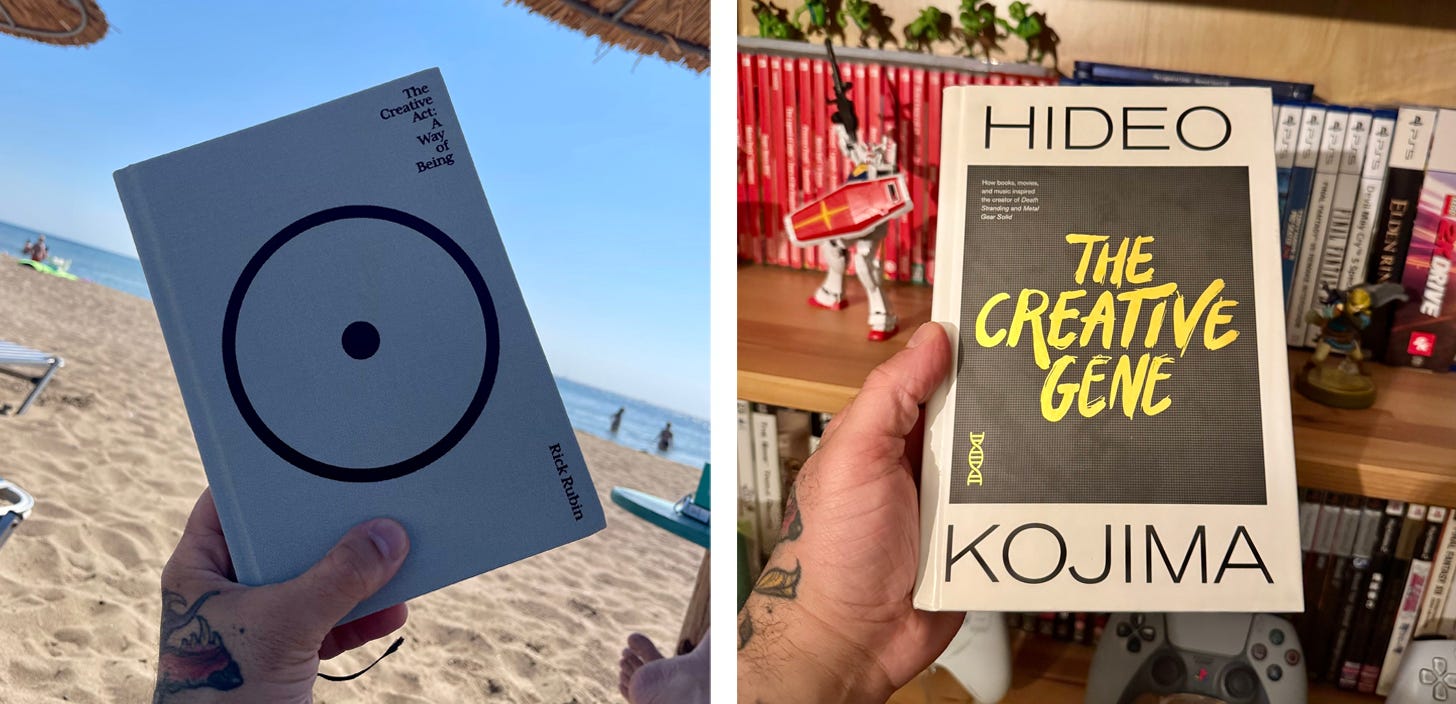
The Creative Act: A Way of Being
by Rick Rubin
This one is not about games, but about creativity itself, which makes it especially relevant for anyone working in our industry. Rubin frames creativity less as a talent and more as a way of living. Through short, almost meditative chapters, he talks about presence, curiosity, and the openness required to build something meaningful.
It is less about process and more about mindset. How to notice ideas, how to sit with them, and how to shape them without forcing outcomes. Some chapters can feel repetitive or abstract, and if you are looking for concrete frameworks, you will not find them here. Still, the perspective is valuable as a reminder that creativity is not about control, but about attention.
Rubin’s tone occasionally leans close to self help, which is not usually my style. Even so, the idea of treating creativity as a practice rather than a destination really resonated with me. After a year where work and life left little space for my other creative hobbies, this book felt like a timely reset. If you are open to a slower, more reflective take on creativity, this one is worth your time ✨📘✨
The Creative Gene
by Hideo Kojima
Still on the topic of creativity, this is a collection of essays where Kojima reflects on the media that shaped him, from sci fi novels and films to music. Influences range from Blade Runner and Inherit the Stars to Joy Division and the Sony Walkman.
Rather than analyzing these works in depth, Kojima focuses on how they quietly molded his creative instincts over time. You start to see how Metal Gear Solid and Death Stranding are the result of a lifetime of small obsessions, not just big ideas.
I went in expecting more behind the scenes stories, something practical to “learn” from. Instead, I found something more personal. A portrait of a creator dealing with loneliness, doubt, and a constant search for meaning.
I read this shortly before seeing Kojima speak at THU Japan in September, which made the book land even harder. It reinforced a simple truth: creativity comes from staying curious, feeding your mind, and paying attention to the world around you.
Also, I got my copy signed by the man himself 😉
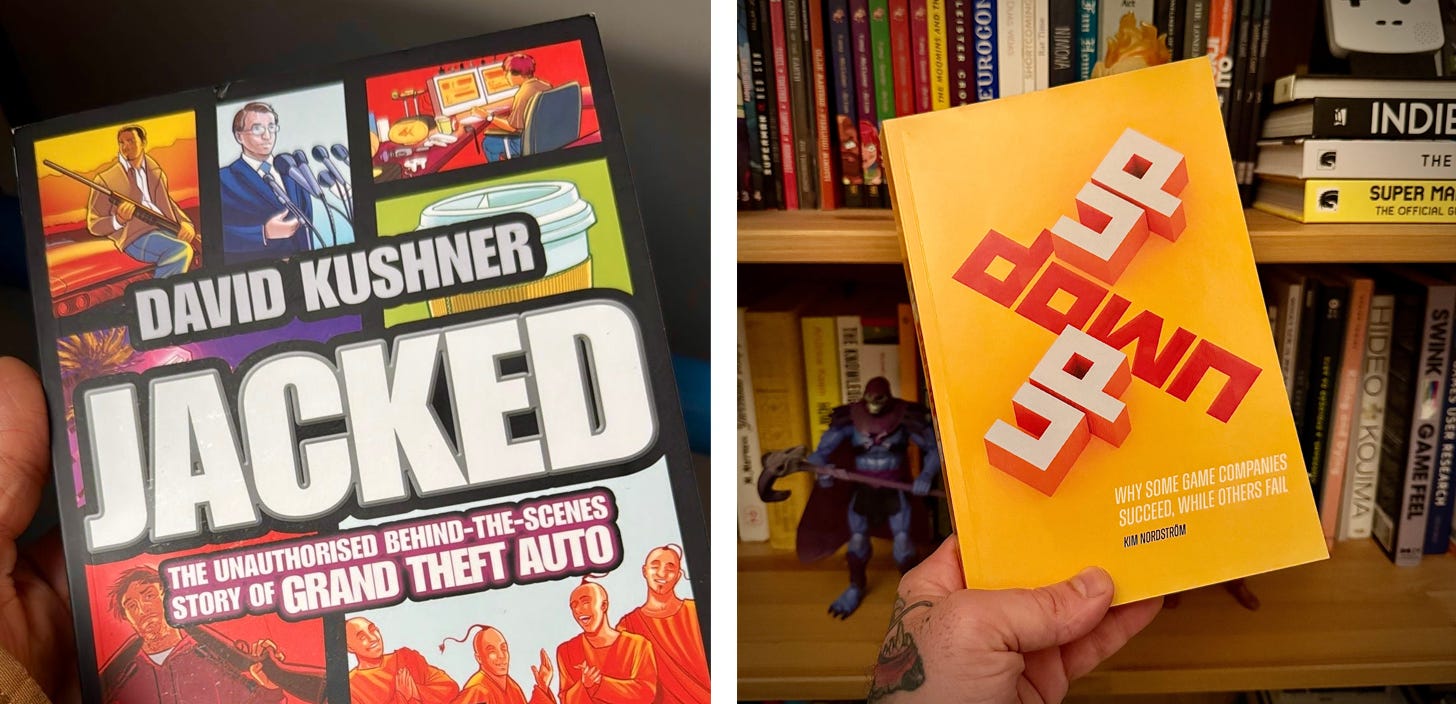
Jacked: The Unauthorised Behind the Scenes Story of GTA
by David Kushner
GTA shaped entire generations of players, developers, and critics. Whether you played San Andreas after school or followed Rockstar through years of controversy, it is hard to deny how much the series pushed the medium forward. I still remember playing the first GTA on PlayStation and feeling a kind of freedom that completely blew my young mind.
The book dives into the chaos behind the franchise: last minute ideas, creative clashes, iconic storylines, and the relentless hunt for fun. It shows how bold decisions, stubbornness, and a bit of luck turned GTA into one of the most influential game series ever made.
What stayed with me most was how the team navigated the tension between creative freedom and public outrage. Some choices aged better than others, but all of them reflect a medium that was still fighting for legitimacy.
Kushner also wrote Masters of Doom, one of my all time favorites, so I went in with high expectations. Jacked lived up to expectations and offered sharp storytelling, as well as an honest portrayal of American gaming culture in the early 2000s.
Up Down Up
by Kim Nordstrom
This book explores why some game companies succeed while others fail by focusing on the business realities behind game development. Through interviews with industry leaders, it breaks down the real phases studios go through: startup, growth, maturity, decline, and sometimes recovery.
There is no magic formula here. The main conclusion is uncomfortable, but important: most studios don’t fail because they lose talent, but rather because they fail to adapt or simply grow too fast. Processes that once worked start slowing teams down, decision making becomes heavier, and risk avoidance replaces experimentation.
I especially liked how grounded the leadership and culture discussions are, alongside the very honest lessons shared by different interviewees. If you have worked in a studio during both good and rough periods, much of this will feel familiar.
On a personal note, the book features several European studios, including places I have worked at or still have friends in. Seeing those stories through a wider business lens was genuinely interesting.
This is a solid read for designers, leads, and anyone about to start their own studio.
Wanna Learn More?
New Gamers Book Club picks drop at the end of each month over on my Substack Notes, or you can just wait for the next roundup post like this one.
Got a recommendation for me? Share it in the comments! ✨📘✨
Great recommendations!
I'm getting a couple from the list to add to my huge pile of "to read" books.
Seems that I have to give Down Up Down a read.