


Welcome to Gamers Book Club, where I share a book recommendation each month as a substack note. Every few months, I collect those suggestions into a single post like this one, so you can check all in one go.
This edition brings together the books from January to April 2026. They cover player psychology, gaming history, decision making, and the human side of game development. A nice mix of perspectives that all, in different ways, circle back to the same question: why do games and players behave the way they do?
Let’s get into it.
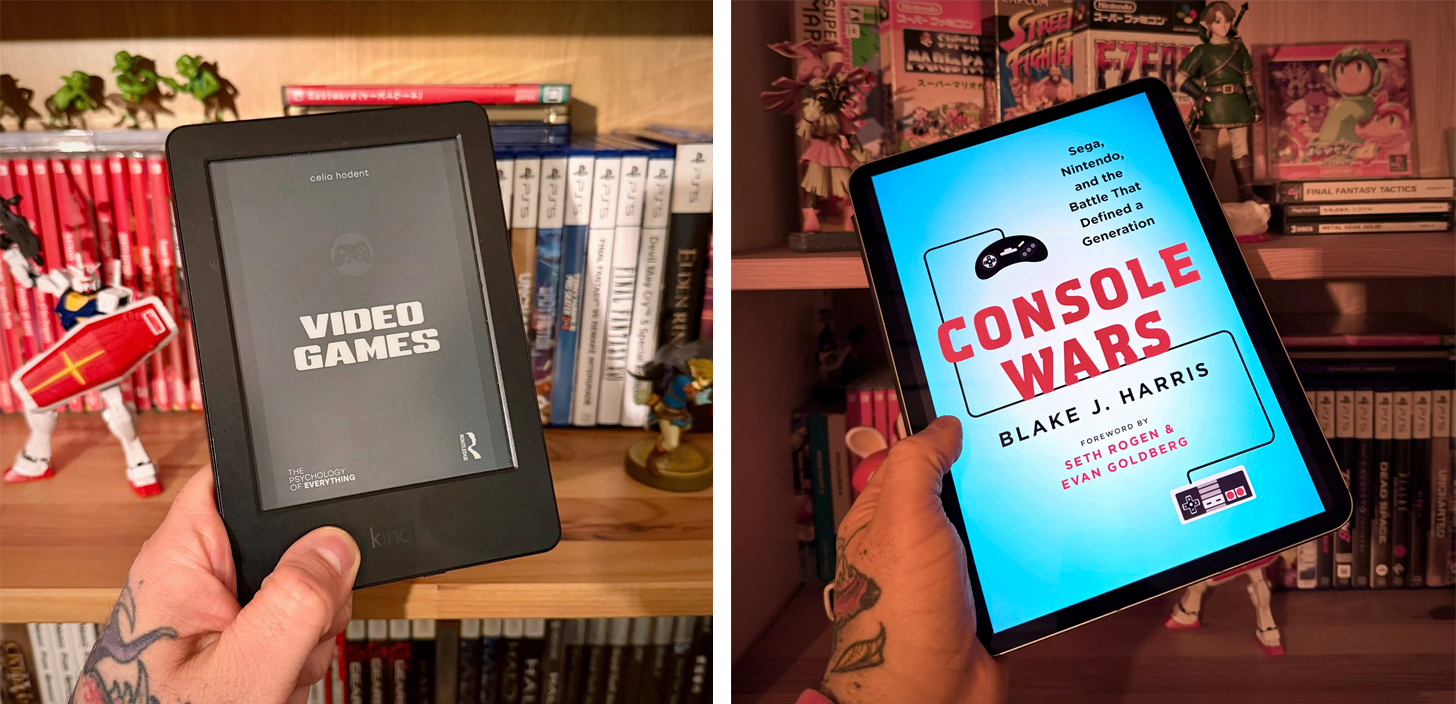
The Psychology of Video Games
by Celia Hodent
This is one of those books that quietly changes how you look at games. It connects psychology, cognition, and player behavior in a grounded way to explain what happens in players’ minds.
Topics like attention, motivation, memory, learning, and emotion are explained clearly with practical examples. What makes it useful is how quickly it translates into design awareness. You start noticing these patterns in games and systems you build.
It is not about formulas or tricks, but about understanding players better so we can design clearer, fairer experiences. Even after years in games, it made me rethink small decisions that are easy to overlook.
If you are into UX or player psychology, this is a strong recommendation. Hodent’s The Gamer’s Brain goes deeper on many of the same topics, so I would start there if you can only pick one. And if you are short on time or budget, her GDC talks on YouTube cover a lot of this for free.
Console Wars
by Blake J. Harris
One of the things I enjoy most about gaming history books is the people behind them. Big personalities, bold decisions, and moments that shaped what many of us grew up playing.
The 90s console battle was not just hardware. It was identity, positioning, and cultural influence. As a kid in Brazil, the Mega Drive was everywhere, the Super Nintendo was the dream, and the debate over which one was “better” was constant in playgrounds and rental stores.
That early bias meant I ignored Sega games for years, only to later realize what I had missed. No worries though, I eventually caught up 😉
The book reads like a corporate thriller. Marketing battles, leadership clashes, and internal politics often mattered as much as the games themselves. The war was fought in boardrooms as much as in living rooms.
Beyond nostalgia, it shows how games do not exist in isolation. Branding, timing, and leadership shape entire generations. It is also a reminder that ego and competition can slow progress more than technology itself.
It is one of those books that makes you rethink history you thought you already understood.
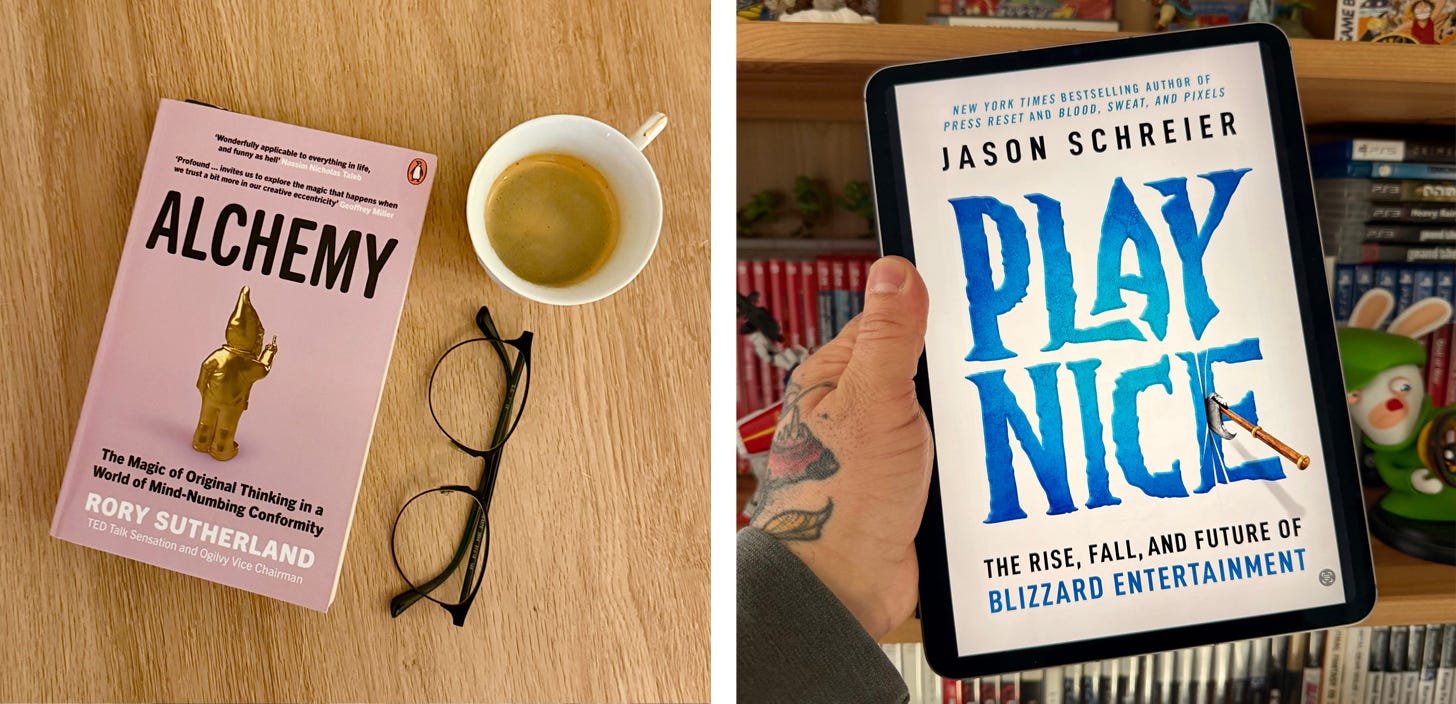
Alchemy
by Rory Sutherland
This one was a gift from a friend who said it would resonate with how I think about design. He was right.
The core idea challenges a simple assumption: not everything that works can be explained logically, and not everything logical actually works. Human behavior is messy and shaped by perception more than we like to admit.
While it uses marketing examples, the parallels to game design are very clear. Many design decisions are not about optimizing systems, but about shaping how an experience feels. Small changes in framing, feedback, or context can completely shift perception, even when the system stays the same.
The gap between “objective” design and perceived experience is often underestimated.
Sometimes the better solution is not the most rational one, but the one that feels right in context. Creativity often lives in those uncomfortable, non-obvious decisions where data alone is not enough.
Play Nice
by Jason Schreier
Like other Schreier books, this is a smooth read, with a focus on Blizzard that makes it especially engaging if you grew up with their games.
It explores the human side of game development: pressure, trade-offs, culture, and the messy reality behind strong releases. What stands out is how often good outcomes come from imperfect processes.
Talented teams, strong vision, and still friction, crunch, misalignment, and difficult decisions behind the scenes.
If you have worked in games, much of this feels familiar. It also makes you reflect on how teams operate, how culture forms, and how leadership decisions ripple over time. Some parts of Blizzard’s history are hard to read, but they show how much the industry still has to evolve.
At its core, this is a reminder that making games is a deeply human process. Imperfect, emotional, and driven by passion and conviction. Take that, AI agents.
If you want a grounded look at one of the most iconic companies in games, this is a solid recommendation.
Wanna Learn More?
New Gamers Book Club picks drop at the end of each month over on my Substack Notes, or you can just wait for the next roundup post like this one.
Got a recommendation for me? Share it in the comments! ✨📘✨