


Welcome to Gamers Book Club, where I share a book recommendation each month as a substack note. Every few months, I collect those suggestions into a single post like this one, so you can check all in one go.
This edition brings together the picks from May to August 2026. They cover topics such as game design, statistics, player psychology, and gaming history.
Let’s get into it.
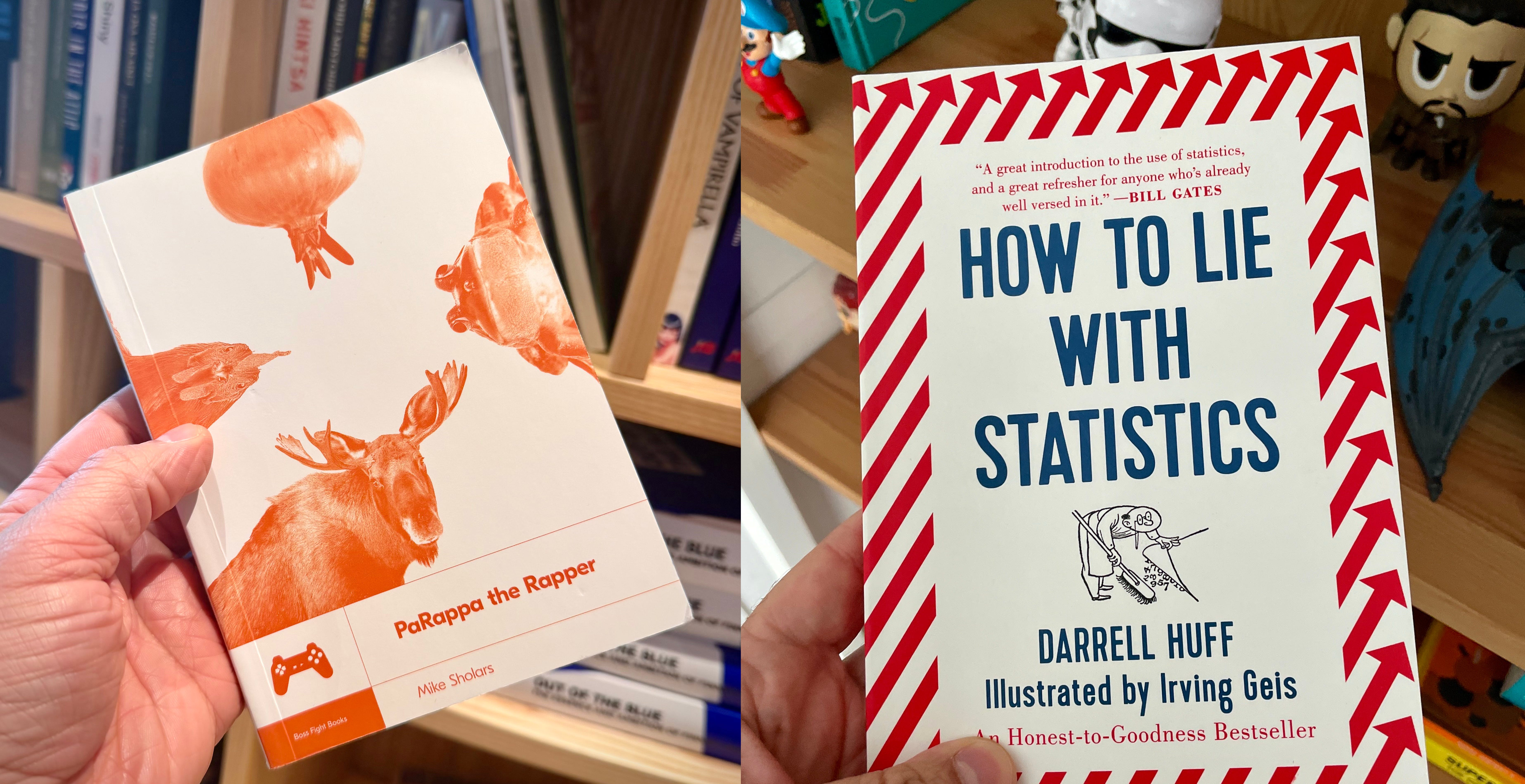
PaRappa the Rapper
by Mike Sholars
I still remember watching another kid play PaRappa on the TV next to mine at a rental store. The music, colorful visuals, and weird vibes felt completely different from anything else around. I couldn’t wait for him to finish so I could give it a spin. Instructor Mooselini’s “step on the gas” rap still gives me that little burst of excitement.
The book explores the game’s creation and how it shaped the author’s life and relationship with games. That mix of development history and personal reflection makes it work so well.
It also reminded me how experimental PaRappa was, blending music, visuals, and storytelling without much of a template. For me, it captures that confidence to go all in on a fun, strange idea without overcomplicating things, something I really miss about that era.
It’s a genuinely fun read, even better if you play PaRappa first!
How to Lie with Statistics
by Darrell Huff
Data is everywhere in game development. Every challenge seems to come with a dashboard, a graph, or a KPI. But reading numbers and understanding what they tell us are very different skills.
Originally published in 1954, this book shows how easily statistics can mislead us. Huff walks through biased samples, misleading averages, and conclusions that sound scientific until you look a little closer.
My favorite part is the discussion around correlation and causality. Retention goes up after a feature release, and suddenly the feature gets all the credit. Maybe it deserves it. Maybe other things changed at the same time. The graph alone doesn’t answer that question.
And that logic goes beyond numbers. We copy successful ideas hoping to recreate the result, or repeat something that worked once and call it a principle. Separating what we observed from the story we tell about it is a useful habit for any creative professional. The examples show their age, but it’s still a good way to become harder to fool with numbers.
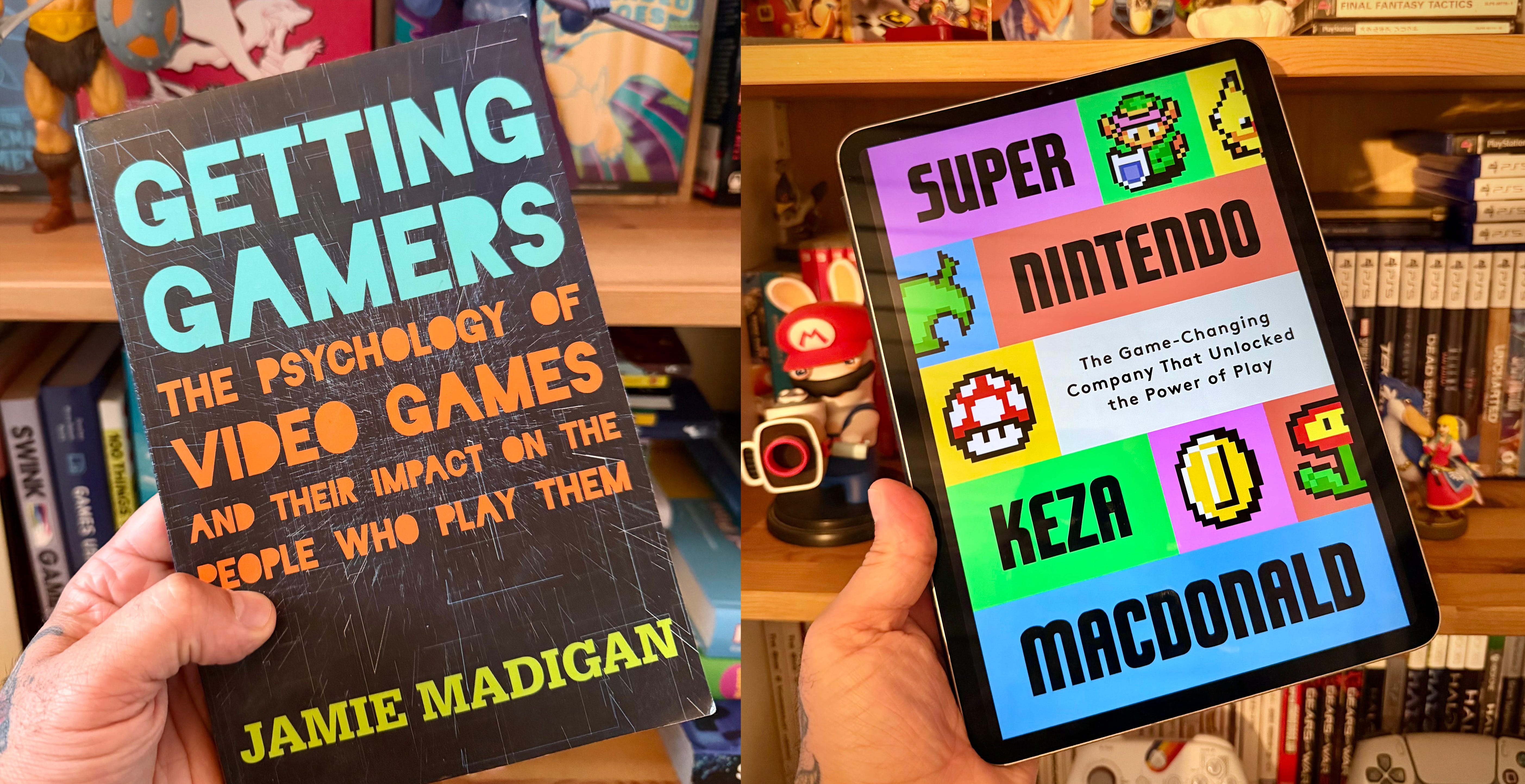
Getting Gamers
by Jamie Madigan
We spend a lot of time talking about mechanics, progression, and game economies, but less time asking why players respond the way they do. This book takes that question seriously without making it feel like homework.
Madigan explores how players think, feel, and act, covering everything from competition and achievement hunting to online toxicity and the things that keep us playing.
It’s fascinating how behaviors that seem irrational from the outside start to make sense once you consider the incentives and social dynamics behind them. Grinding, platform loyalty, nostalgia, and arguments between fan communities all look a little different through that lens. That’s where the book becomes useful for design.
Before dismissing a behavior as strange, it’s worth asking what the player is getting out of it. It’s approachable, entertaining, and doesn’t reduce games to something simply good or bad. It treats playing as a human activity shaped by the same complicated motivations and biases as the rest of our lives.
Super Nintendo
by Keza MacDonald
I nearly skipped this one. I’d already read so much about Nintendo’s history. What else was there to learn?
But the recommendations kept coming, so I gave it a try. And oh boy, that was the right decision. MacDonald explores Nintendo’s focus on players, its love for weird ideas, and its willingness to ignore what everyone else is doing. What interested me most was how lessons and failures from older projects fed into later games, creating connections that only become obvious when you look back.
It’s a useful reminder that good ideas take time to brew, and that chasing the latest technology isn’t the same as making something people enjoy.
The author’s affection for Nintendo sometimes made the book feel a little too generous toward the company’s less flattering periods. Still, the stories behind those remarkable games made it hard not to get caught up in the same optimistic mood.
I discovered plenty about my favorite franchises, it definitely reignited that little creative spark and made me wanna pickup the controller and play some classics! 🎮
Wanna Learn More?
New Gamers Book Club picks drop at the end of each month over on my Substack Notes, or you can just wait for the next roundup post like this one.
Got a recommendation for me? Share it in the comments… for real, I’m running out of ideas! ✨📘✨
More books to my pile of to-read
You've summed up PaRappa the Rapper perfectly! Although I didn't play the game until a few years after it released, it has stuck with me as being one of the most unique games I've ever played. Book has been wish listed, thank you!