


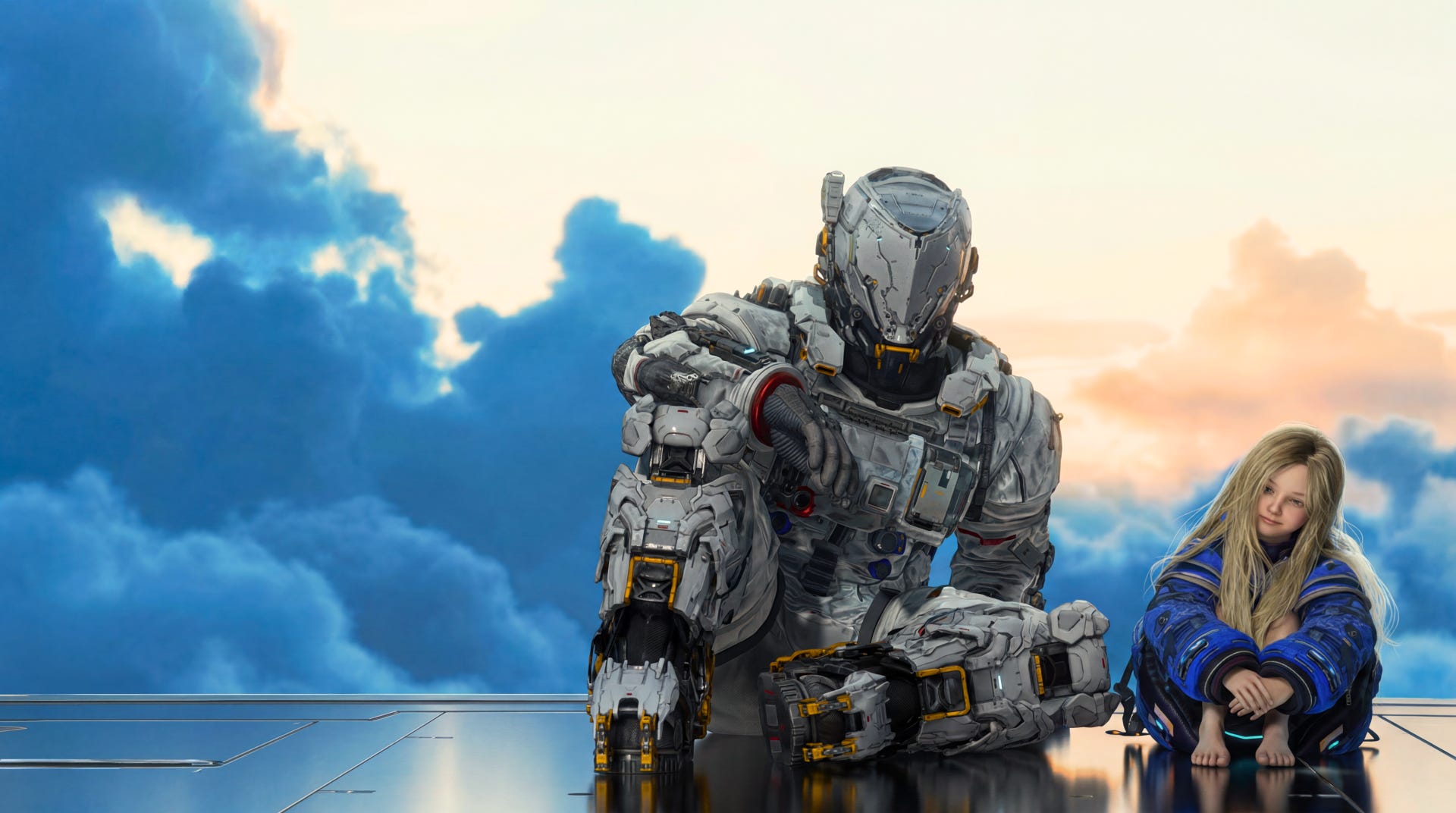
Welcome to Tales From The Couch, the series where I share my opinions and short UX notes about a game I played.
This time we’ll talk about Pragmata, Capcom’s sci-fi “action puzzle” about an astronaut trapped on a space station, who gets help from a childlike android to escape the place and discover what is behind that mess.
On paper, the setup sounds familiar: a cold space facility, a hostile AI, robots, guns, and an emotional companion character who clearly knows more than she says. It is a structure we have seen many times before. But this game’s best idea is not really in the premise. It is in the hands, in the second-by-second gameplay actions.
You are asked to shoot with one part of your brain and hack with the other. Combat is not only about going guns blazing like a 90s action hero. It is about timing, dodging, managing distance, deciding what needs priority, and trusting that the small android on your back is not just part of the story, but part of your input system.
There is a lot to love in this game, and also a few things that made me wonder if some decisions were really the best ones. So grab a coffee, sit comfortably, and let’s dive in.
🌔 Houston, we have a premise
Pragmata takes place in the near future, inside a lunar research station controlled by a hostile AI. The progression is linear and the two main characters are quite vanilla as individuals, yet cute when combined. Hugh is stranded, Diana is mysterious, and the objective is to simply survive, understand what happened, and find a way back home.
The premise is very Capcom in the best way. It feels committed to its vision and gives me a lovely “Xbox 360” vibe.
What I appreciated immediately is how focused it feels. This is not an open world full of icons, daily missions, side loops, battle passes, or seasonal checklists. It is built around a direct single-player structure, with a clear beginning, middle, and end. In the current landscape, that alone feels refreshing. Not every game needs to become a platform for an ever-growing stream of content. Sometimes a game just needs one strong idea and enough confidence to follow it through.
🕹️ Button mashing
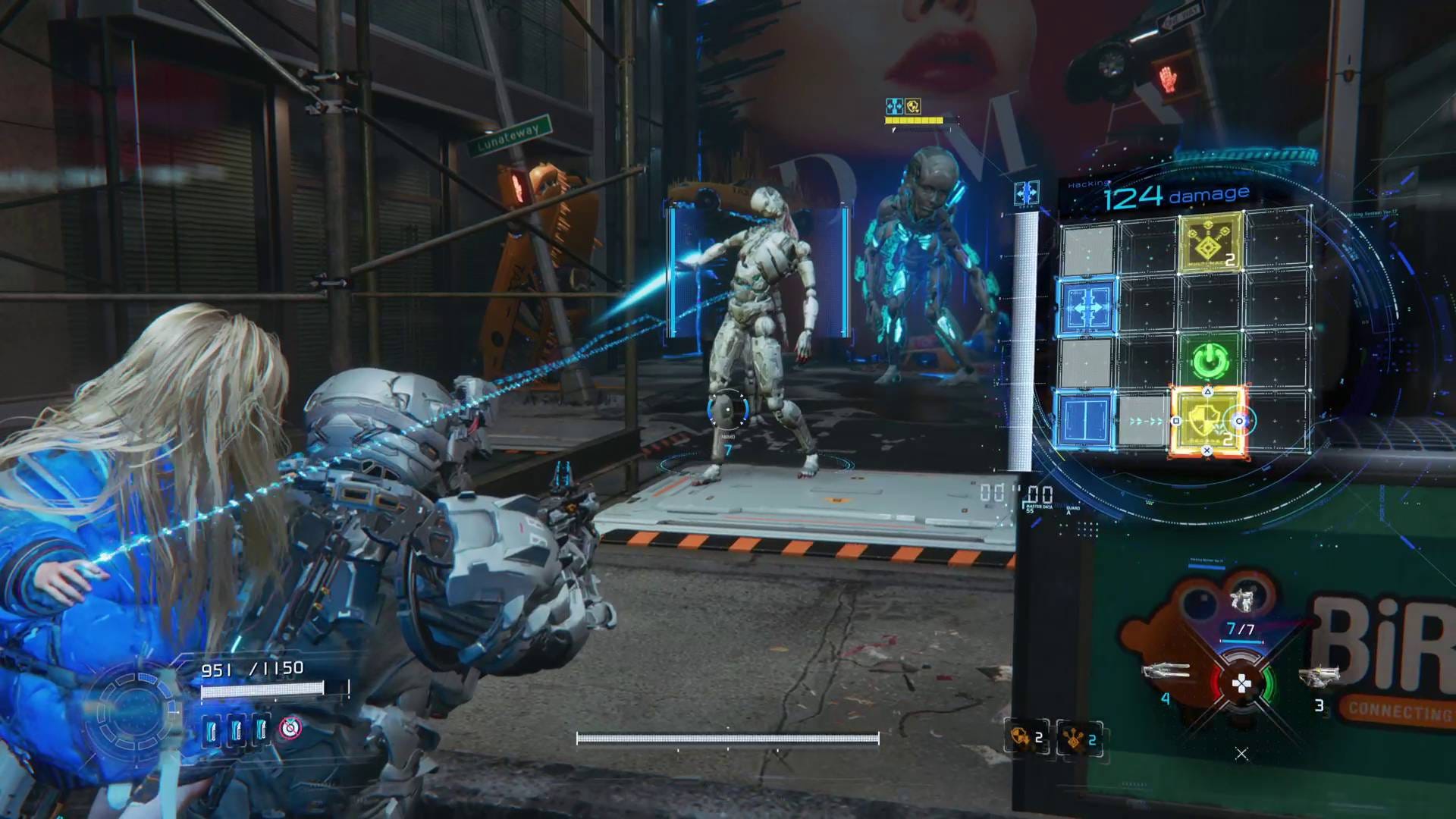
Its main innovation is the connection between hacking and shooting. I’ve used hacking before in games like Nier: Automata, but there it often felt disconnected from the regular gameplay loop, separated by a wall that made it feel more like an add-on. Here, things are designed to feel part of the combat flow.
Enemies are not just health bars waiting to be emptied. They need to be “opened up” by Diana first, which means navigating a small hacking grid in real time with the face buttons while Hugh is still moving, dodging, aiming, and trying not to get destroyed. Only after Diana creates that opening can Hugh properly punish the enemy with the shoulder buttons.
That small design choice dictates the entire rhythm of combat. Every encounter becomes a test of attention, especially when bigger waves of enemies spawn at once. You are not only wondering if you can hit the enemy, you are also asking if you have enough space to keep moving while solving the hack, whether you should choose the quickest route for a smaller effect or risk a longer one for a better payoff, and whether you can avoid getting so focused on the interface that you forget there are still three other robots trying to kill you from the corners of the room.
This is the kind of friction I enjoy because it is not there to waste time. It creates decision-making. It makes you focus on your actions instead of just smashing buttons.
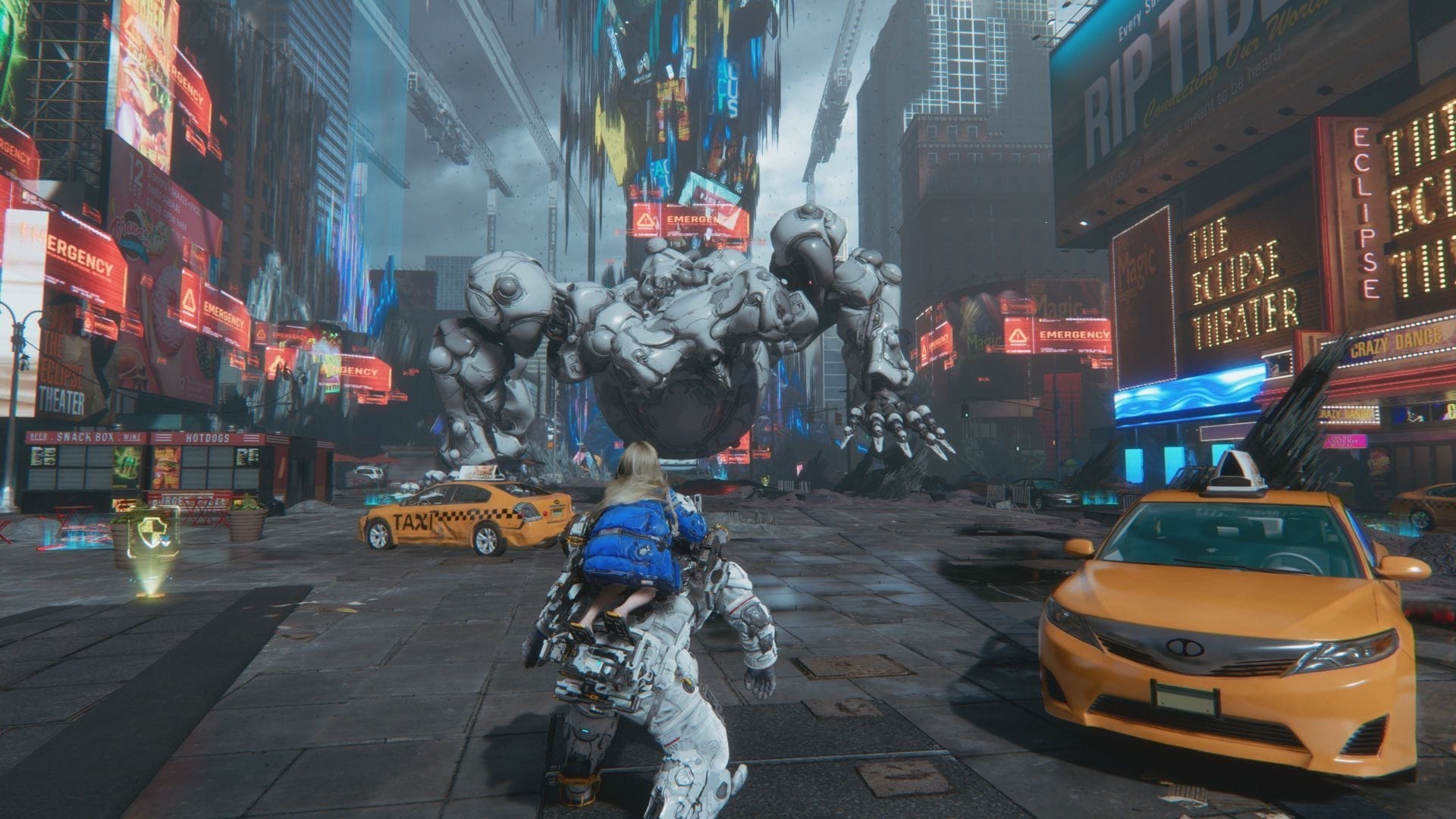
In UX, friction is often treated like the enemy. We remove steps, reduce clicks, simplify flows, and try to make everything feel smooth. Most of the time, that is the right instinct. But games are different. Good friction can create meaning, and with the right context and intention, a friction point can become a skill.
The hacking system is not just an annoying UI layer sitting on top of combat, or a friction point getting in the way of destruction. It is a logical part of the combat. It changes how you read the battlefield and becomes part of the challenge.
Speaking about challenges, this is where I started missing something.
🤔 Challenge and price tag
This was a refreshing experience, especially after spending hundreds of hours roaming the sands of Crimson Desert. I went through almost every fight without much effort and still had fun, but the game was quite easy.
Don’t get me wrong, I’m not one of those players who expect every boss fight to be sweaty. The thing here is that the game gives me this standard “survival horror” setup from its ambiance, but it is also very generous with resources and upgrades.
Part of the fun of survival horror games such as Resident Evil or Dead Space, comes from clever resource management. Those little thoughts like “should I use this powerful shot now, or save it for a bigger challenge?”, create a tension that fits the experience. It is more than just throwing a batch of ultra-hard enemies at the player.
My gut reaction called for some of that tension here. But on the other hand, maybe one of the reasons I had so much fun with Pragmata is exactly because I could get immersed and progress at a natural pace without suffering or thinking too much. So maybe their approach was the best fit?
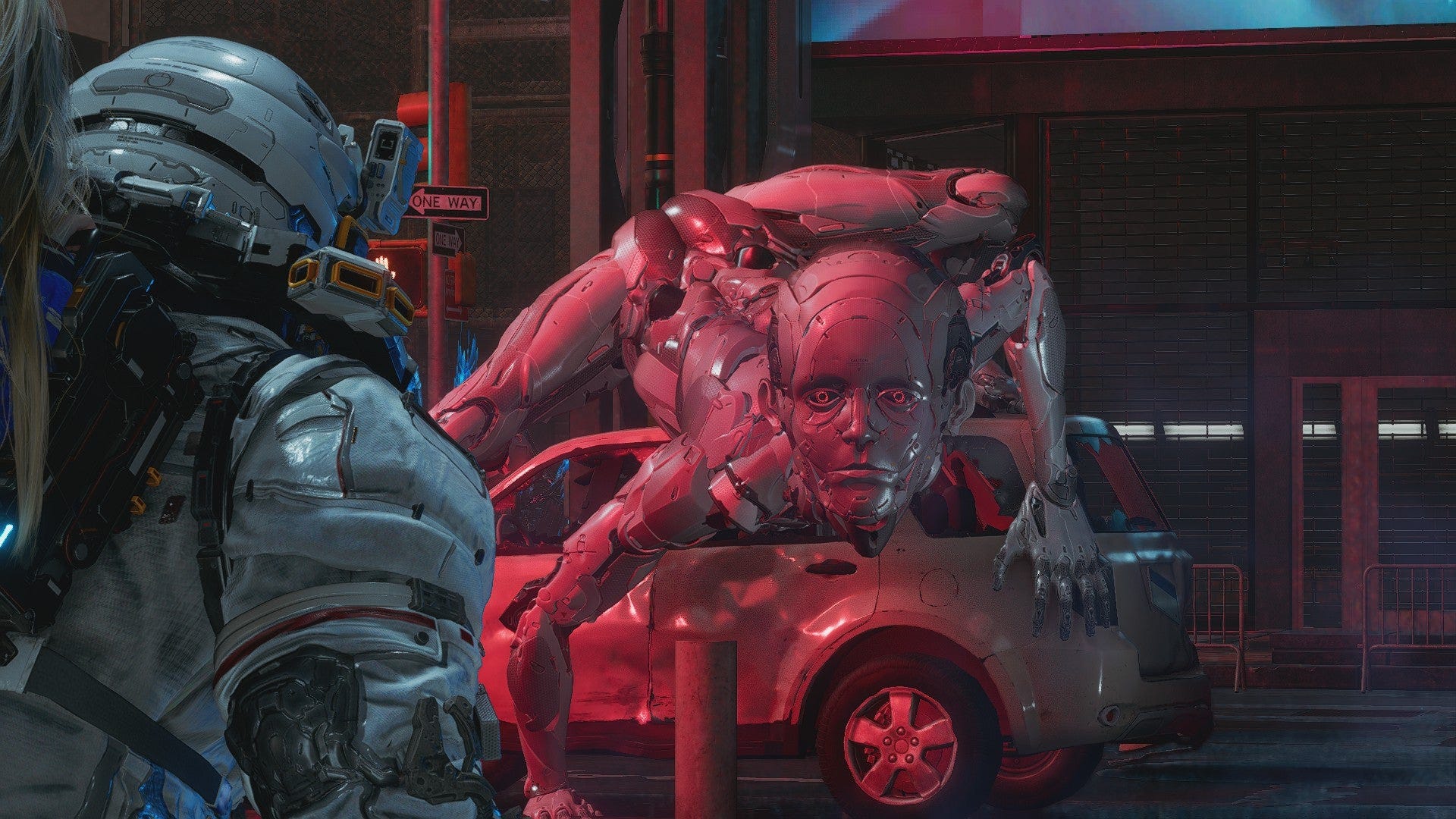
My only real negative highlight is complicated, because it has little to do with the game itself and more with the overall state of the industry and its economy. I finished Pragmata in something like 12 hours, including a bunch of optional collectables and “hard zones.” I had a blast with it, but it took me around 3 or 4 days of playing, and it comes at a full triple-A price tag.
I got this game as a gift from my wife and loved every second of it. I also believe it is better to finish a game with the feeling of “I want more of that” than with the taste of filler content. But it is hard for me to recommend a friend to spend around 60 euros on this title. My suggestion is to wait for a promotion or price drop and then get it.
That does not minimize the great experience the game offers. It is more a sign of the times, so take this comment with a grain of salt.
🧩 Final Notes
Pragmata feels like a game from a timeline where more studios still made weird, focused, mid-sized action games with one strong idea and enough confidence to build everything around it. That alone makes it worth paying attention to, and that’s probably why many gamers have been falling in love with this product.
And in case I didn’t mention it before, the graphics and overall art direction are stunning. It may not be a perfect game. The story is predictable in places, the combat can get messy, and the structure does not always push the main mechanic as far as it could. But there is something valuable here.
And, my God, they almost made me cry at the end of the story… almost.
So my conclusion is simple: play it if you enjoy focused action games, experimental mechanics, unique design ideas or wanna check a wholesome story of connection, humanity, and caring. 😉